
Equipment that performs reliably under extreme pressures, high temperatures, and highly corrosive environments — engineered and fabricated for demanding energy applications.
We design and fabricate to the codes this industry works to — ASME Section VIII, TEMA, API 620, API 650 and API 660 — for EPCs, project managers and facility operators across North America.
Harris Thermal has supported projects from Gulf Coast refineries to the Canadian oil sands. Lethal Service and Cyclic Service designs are available per ASME Section VIII, including fatigue life and weld integrity considerations for refinery and petrochemical duty.
Harris Thermal can design and fabricate to applicable TEMA and ASME Section VIII requirements based on project scope. TEMA class is a mechanical robustness decision, not a quality grade, and specifying Class R where Class C would serve adds cost without adding service life.
Our article on TEMA classes R, C and B works through the specific mechanical differences and where over-specification actually costs money.
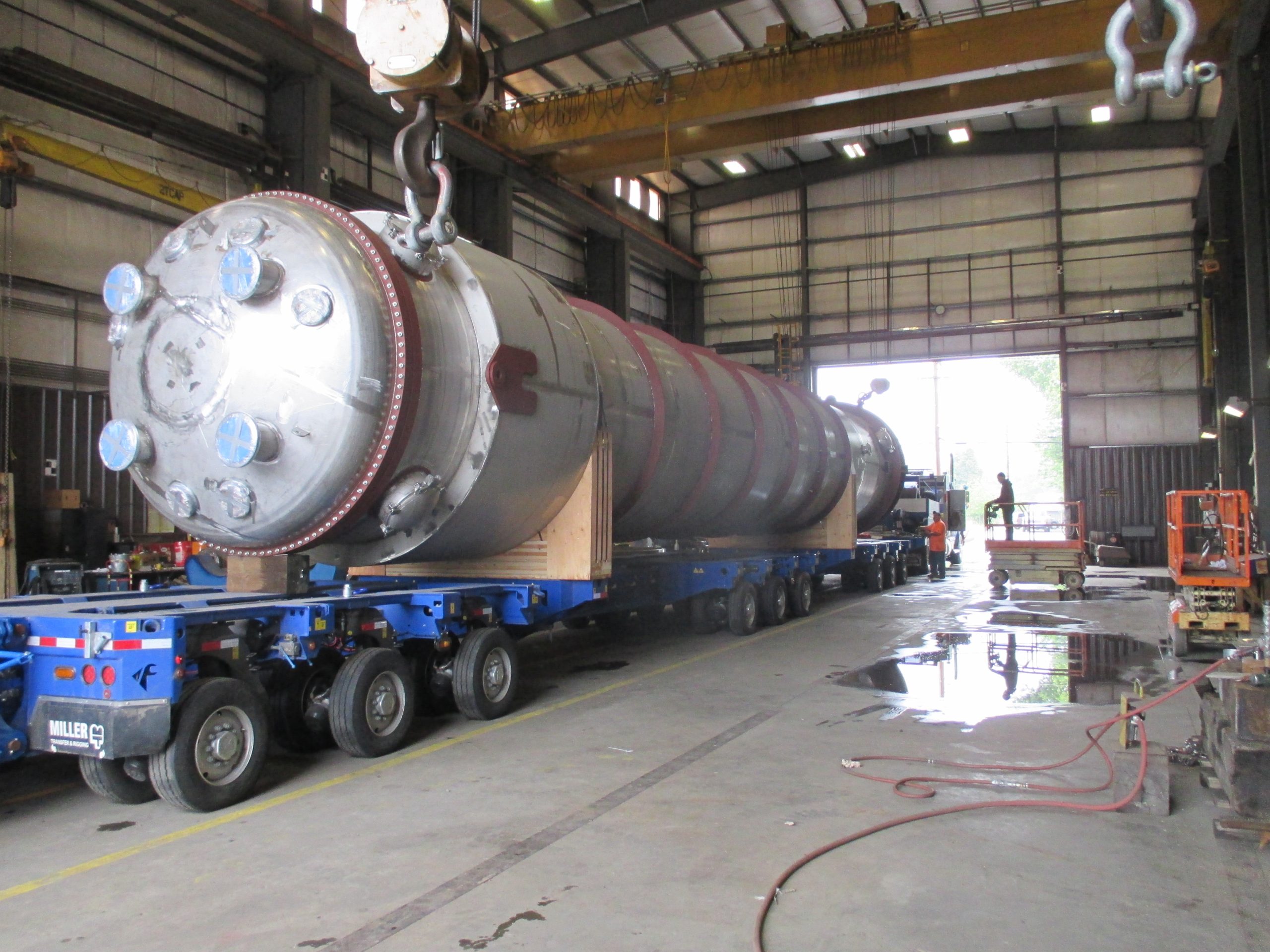
Harris Thermal fabricates the heat exchangers, vessels and tanks that go into plant cooling-water systems, built to the design conditions and materials the system requires. The cooling system itself, and its rotating and control equipment, is supplied by others.
Materials follow the actual service — including sour and high-chloride duty — from carbon steel through duplex, high-nickel alloys, titanium and clad construction. See our materials and metallurgy capability.
Built to existing geometry, re-tubed where the shell is sound, or re-rated past the original basis. See repairs, re-tubing and re-rating, or our article on the indicators that signal repair or replacement.
Shell-and-tube heat exchangers, process coolers and heaters, condensers, reboilers, replacement exchangers and tube bundles, ASME Section VIII pressure vessels, separators, knockout drums, accumulators, process vessels, columns and towers, scrubber vessels, cyclones, custom tanks, skid-mounted fabricated equipment within our scope, and high-alloy equipment for corrosive service.
Yes. Replacement exchangers can be built to the original envelope and nozzle geometry so the unit drops into existing piping and supports, re-tubed where the shell is sound, or re-rated for a duty above the original basis. We work from existing drawings, field measurements or reverse-engineered specifications. Existing drawings, the current duty and the duty now required are the useful starting point.
Yes. Harris Thermal can design and fabricate to applicable TEMA and ASME Section VIII, Division 1 requirements based on project scope, including TEMA Class R, C and B and API 660 where the specification calls for it. TEMA class is a mechanical robustness decision rather than a quality one, and over-specifying it adds cost without adding service life.
Carbon steel, stainless steels, duplex stainless, AL-6XN, high-nickel alloys, titanium and clad construction. Clad and explosion-bonded materials are available where a corrosion-resistant wetted surface over a structural carbon-steel backing suits the design. Selection follows the actual service conditions, including sour and high-chloride duty, rather than the nominal ones.
Whether you need a single ASME vessel, a field of API tanks, or exchangers to TEMA and API 660 — tell us the duty and the service conditions.